Building the Evidence and Infrastructure for Continuous Care
At ChatDok, research is not separate from healthcare delivery. From conversational AI and remote monitoring to multicenter clinical trials and emerging digital-twin technology, our goal is to translate advanced AI into continuous, personalized, and clinically responsible healthcare.
Multicenter RCT Portfolio
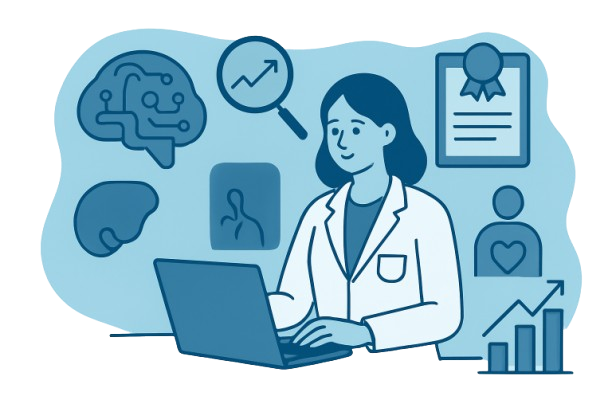
Multicenter Randomized Controlled TrialEvaluating an AI-assisted digital chronic care platform combining remote monitoring, patient engagement, and physician oversight in heart failure and coronary artery disease.
From AI Models to Real-World Care
Research designed for translation
Healthcare AI cannot be evaluated by model performance alone. It must work with patients, clinicians, clinical workflows, healthcare data, interoperability requirements, and real-world constraints.
Artificial Intelligence
Multimodal AI, conversational AI, predictive analytics, medical reasoning, remote monitoring, and specialized clinical AI components for continuous cardiovascular care.
Safety
Guardrails, validation pipelines, hallucination control, monitoring, and human oversight.
Clinical Science
Clinical validation, prospective evaluation, randomized controlled trials, and evidence generation.
Healthcare Infrastructure
EHR integration, longitudinal patient data, interoperability, privacy, and scalable digital care workflows.
Translational Innovation
New approaches such as personalized modeling and digital twins that can support the next generation of clinical decision-making.
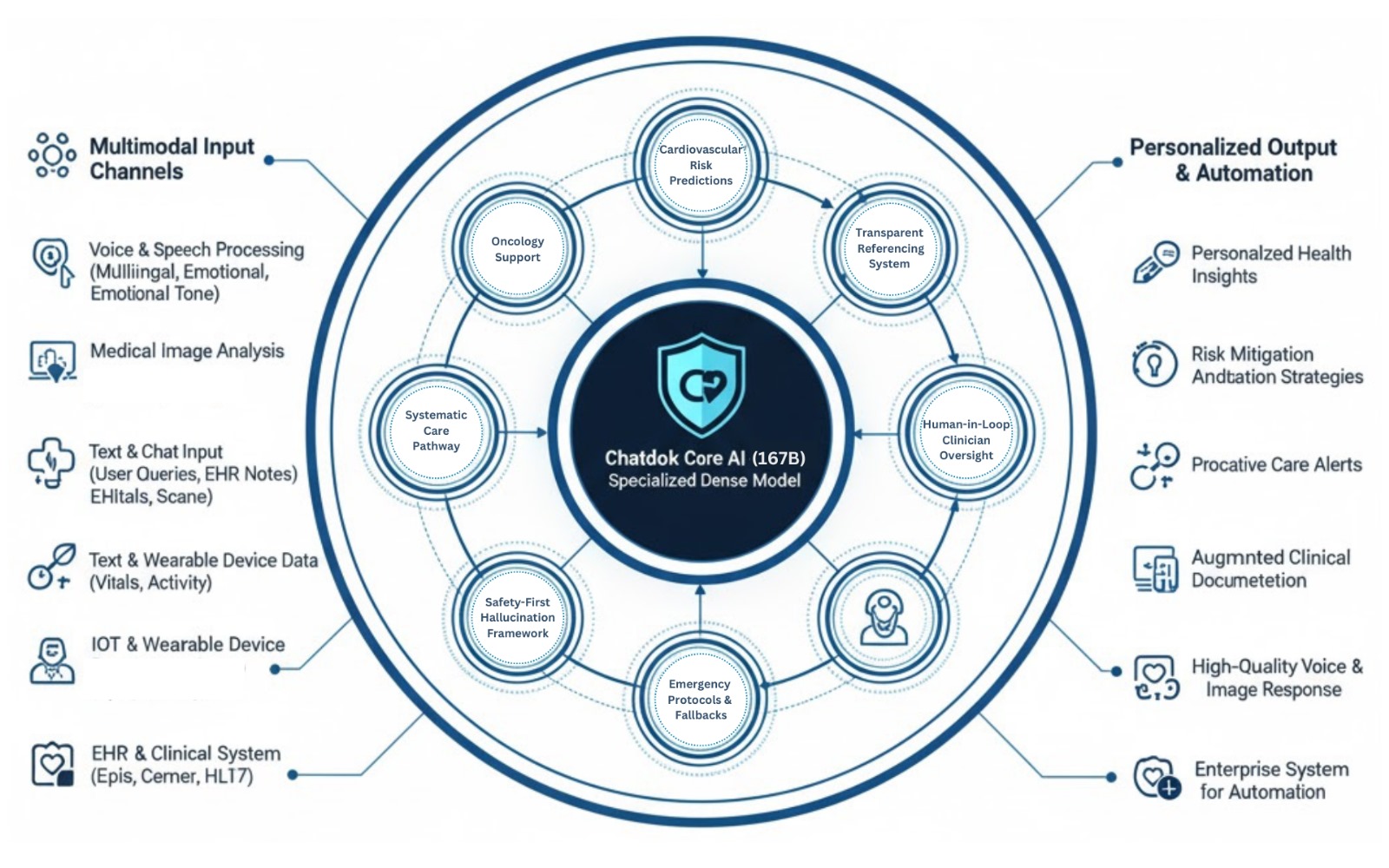
Cura: The AI Infrastructure Behind ChatDok
Cura is ChatDok's AI infrastructure for healthcare. Rather than relying on a single general-purpose model, the architecture combines specialized AI components designed for different clinical and operational tasks. The current Cura 2.1 architecture uses a 2.7T+ parameter constellation framework together with specialized support models and deterministic safeguards. The objective is not simply to build a larger model. It is to build an AI system that can operate responsibly within healthcare workflows.
AI Safety Is a Clinical Requirement
Intelligent systems must also know their limits
Generative AI introduces significant opportunities in healthcare — and significant risks. ChatDok's research therefore places safety and reliability at the center of the platform architecture.
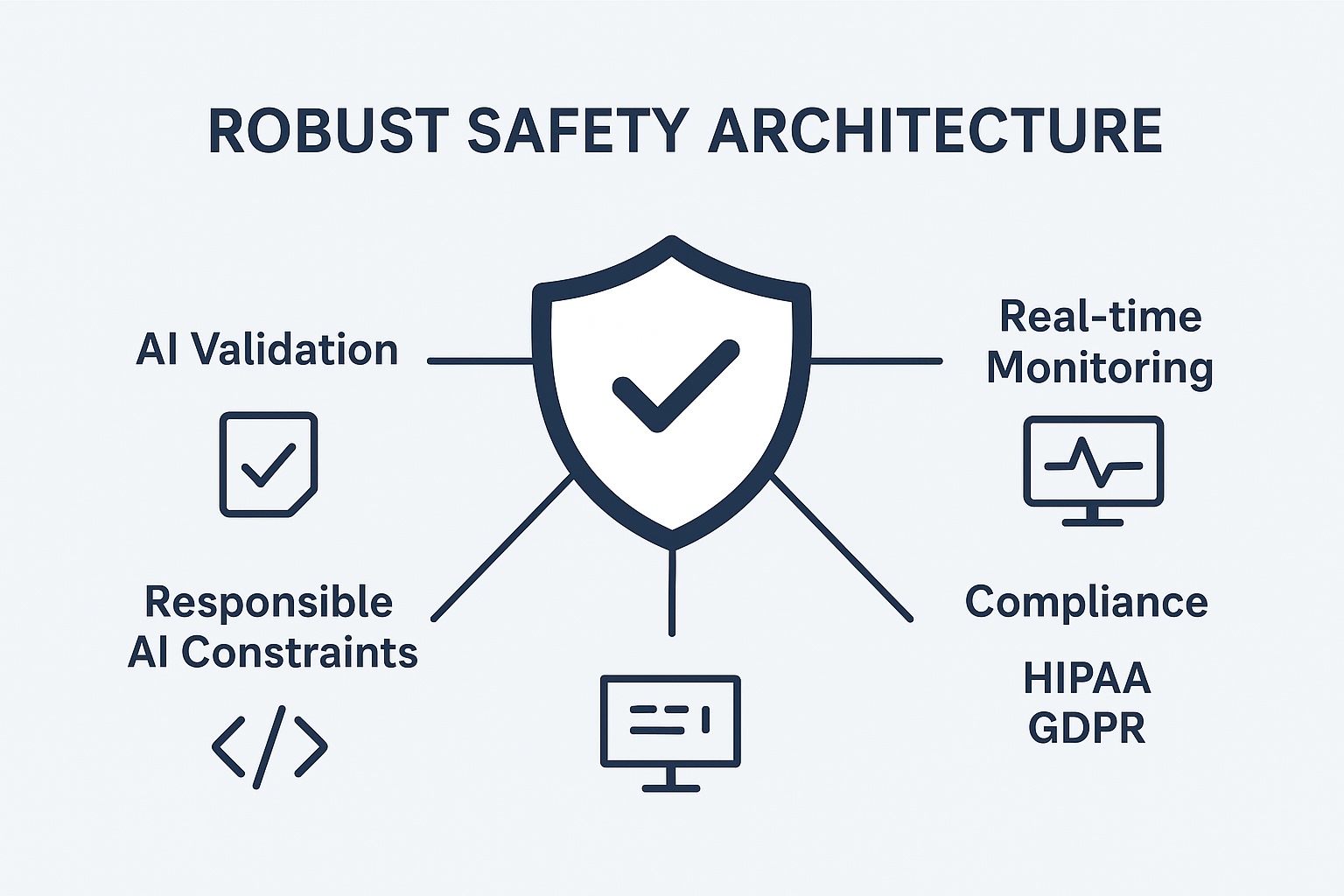
Responsible AI Constraints
Define what the system can and cannot do within a healthcare context.
Medical Verification
Support AI outputs with structured validation and medically grounded information.
Hallucination Control
Develop methods to reduce unsupported or misleading medical outputs.
Deterministic Guardrails
Use controlled logic and predefined constraints around sensitive clinical workflows.
Validation Pipelines
Continuously evaluate AI behavior across relevant healthcare scenarios.
Human Oversight
Keep appropriate clinical decisions within the responsibility of qualified healthcare professionals.
Research Into Safer Medical AI
From principles to measurable reliability
Our work on medical AI safety includes research into robust hallucination control for generative AI. We investigate how healthcare AI systems can better distinguish between:
This is particularly important when AI is used in patient-facing or clinically relevant environments.
Implementing Robust Hallucination Control for Medical LLMs: A ChatDok Case Study
Peer-reviewed technical methodology for deterministic medical verification and strict hallucination mitigation pipelines in clinical LLMs.
Read Case Study PaperClinical Validation: Evidence in Real Patients
From promising technology to clinical evidence
Healthcare AI ultimately needs evidence in real patients and real clinical environments. ChatDok is therefore building an evidence base through clinical research and validation programs across its platform.
Real-World Clinical Environments
Testing technology within actual healthcare workflows rather than isolated technical demonstrations.
Prospective Evaluation
Measuring how AI-supported care performs over time.
Randomized Controlled Research
Evaluating clinical interventions against predefined outcomes where appropriate.
Patient & Clinician Experience
Understanding usability, engagement, workflow impact, and adoption alongside clinical measures.
Health & Economic Outcomes
Where appropriate, evaluating outcomes such as utilization, adherence, follow-up workload, and healthcare resource use.
ChatDok-Heart: Clinical Validation of AI-Native Cardiovascular Care
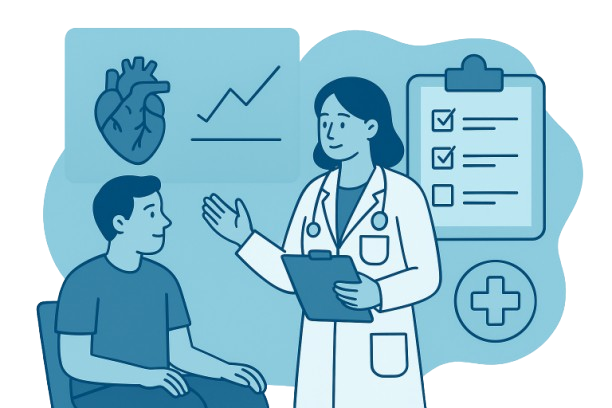
ChatDok-Heart is our flagship clinical research program evaluating physician-led, AI-assisted continuous cardiovascular care for patients with heart failure and coronary artery disease. A multicenter, randomized, controlled trial is evaluating ChatDok-Heart plus usual care versus usual care alone in patients with heart failure and coronary artery disease.
The study evaluates patient-centered cardiovascular outcomes, including KCCQ-12 Overall Summary Score in heart failure and SAQ-7 Summary Score in coronary artery disease, alongside blood-pressure control, LDL-C control, medication adherence, patient self-management, healthcare utilization, and earlier clinician review of clinically relevant deterioration.
Beyond the Appointment: Researching Continuous Care
Traditional chronic disease management often relies on periodic clinical encounters. Our research explores what becomes possible when patients can remain digitally connected to their care journey between those encounters.
Patient engagement
Remote monitoring
Conversational AI
Longitudinal data
Predictive analytics
Physician oversight
Multimodal Predictive Analytics (7–30 Day Risk Horizon)
Combining longitudinal patient data, symptoms, vital signs, adherence patterns, and other relevant signals to identify patients at risk of cardiovascular deterioration within a 7–30 day horizon and support earlier clinical review.
Can physician-led, AI-assisted continuous care help clinicians and patients identify meaningful changes earlier and support proactive intervention?
Clinical evidence is essential to answering it.
Digital Twins: The Next Frontier of Personalized Clinical Modeling
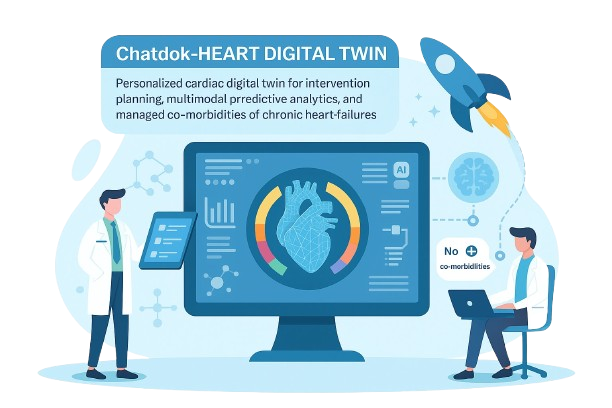
ChatDok is exploring a personalized cardiac digital twin designed to model individual cardiovascular dynamics and support clinical decision-making.
The long-term vision is to create computational models capable of representing an individual's cardiovascular state and exploring how that state may respond to different interventions.
This technology remains in research and development and is distinct from the currently deployed ChatDok products.
From Research to Deployment: Building Technology That Can Leave the Lab
Our research programs are designed with translation in mind. The pathway is:
Discover
Develop new AI methods, clinical models, and healthcare technologies.
Validate
Test performance, safety, usability, and clinical relevance.
Integrate
Connect validated technology with real healthcare workflows and infrastructure.
Evaluate
Measure clinical, operational, patient, and economic outcomes.
Deploy
Bring validated capabilities into healthcare environments.
Learn
Use real-world evidence to continuously improve the system.
Research → Validation → Deployment → Evidence → Continuous Improvement
Research Across the ChatDok Platform
One research ecosystem. Multiple applications.
ChatDok App
Real-world patient engagementOur patient-facing AI provides a large-scale environment for studying conversational healthcare, patient engagement, multimodal interaction, and responsible medical AI.
Explore ChatDok AppChatDok-Navigator
Longitudinal care coordinationResearch and clinical implementation focus on how AI can support patients and care teams between hospital discharge and recovery across multiple therapeutic pathways.
Explore ChatDok-NavigatorChatDok-Heart
Physician-led, AI-assisted cardiovascular careOur flagship clinical research program investigates continuous cardiovascular monitoring, patient engagement, multimodal predictive analytics, and proactive physician oversight for heart failure and coronary artery disease.
Explore ChatDok-HeartCura
AI infrastructureThe underlying architecture brings together specialized models, multimodal capabilities, safety mechanisms, and clinical AI components.
Explore CuraResearch With Real-World Partners
Innovation works better when developed with healthcare
These partnerships enable us to move beyond laboratory benchmarks and evaluate AI in the environments where healthcare actually happens. Our current programs include multi-site clinical research and real-world implementation initiatives.
Our Research Principles
Clinically useful. Scientifically rigorous. Responsible by design.
Evidence over hype
Technology should be evaluated by measurable outcomes, not technological novelty alone.
Safety before autonomy
AI should operate within appropriate boundaries and clinical oversight.
Human-centered design
Patients and clinicians remain central to the healthcare experience.
Interoperability by default
Healthcare AI must work with existing healthcare infrastructure.
Translation matters
Research has greater impact when it can move from the laboratory into clinical practice.


2026 - All Rights Reserved.